Every shipping line and container depot knows the silent cost of corrosion. Door locking gear that seizes after six months at sea, keeper plates that flake rust onto cargo, padlock boxes that fail inspection—these are not minor annoyances. They are operational delays, cargo claims, and premature replacements that drain maintenance budgets year after year. For operators managing fleets of ISO dry containers, the question is not whether rust will appear, but when—and how much it will cost to fix.
The answer lies in understanding both base materials and surface finishes. Shanghai Silvaro Global Co., Ltd., a trusted international trader in marine transport safety products and ISO container maintenance spare parts, addresses this challenge daily. Our engineering team frequently advises depots and shipping lines on selecting hardware that survives decades of salt spray, temperature swings, and mechanical wear. Below, we break down what actually works—and what does not—when specifying dry container parts for long-term marine service.
The Real Cost of Rust on Container Hardware
Rust on container hardware is not a cosmetic issue. It is a structural and operational one. When door locking gear corrodes, the cam mechanism binds, making doors impossible to secure properly. When keeper plates rust through, the door alignment shifts, compromising the container’s weatherproof seal. When forged handles corrode, crews struggle to operate the locking system during loading and unloading, adding minutes to every move—and minutes multiply into hours across a fleet.
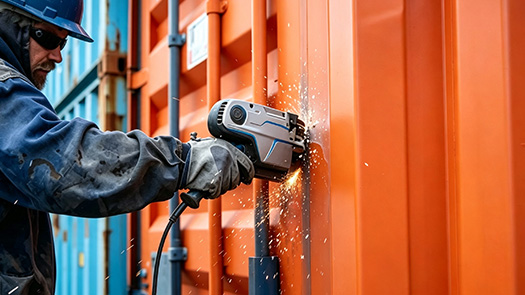
For container depots, the financial picture is worse. Replacing corroded hardware requires cutting out old components, sourcing matching replacements, and performing hot work that takes the container out of service. Every hour a box sits in the repair bay is revenue lost. The best strategy, therefore, is not faster repairs but smarter specifications: choose materials and finishes that prevent the problem before it starts.
What Base Materials Resist Marine Corrosion?
The foundation of rust resistance is the steel itself. Most ISO container hardware uses high-strength steel because it must endure repeated impact, vibration, and load forces during ocean transport. However, not all steel behaves the same in salt-laden air.
High-strength low-alloy steel is the industry workhorse for container structural components such as front posts, rear posts, side rails, and bottom rails. Its carbon content is carefully balanced to provide tensile strength while retaining weldability. More importantly, alloying elements improve its natural resistance to atmospheric corrosion compared to plain carbon steel. When properly finished, this material performs reliably for the standard service life of a marine container.
For door locking components—gear, cams, keepers, forged handles—the material choice matters even more. These parts undergo constant abrasion during opening and closing cycles. A finish that resists rust but wears off quickly offers no long-term protection. Shanghai Silvaro Global sources components made from steel that has been certified for marine service, with uniform hardness and consistent dimensional accuracy to match OEM specifications.
Which Surface Finishes Provide Lasting Protection?
The finish is where the real difference between a 5-year part and a 20-year part lies. Here is what genuinely works in marine environments:
Hot-dip galvanizing remains the benchmark for corrosion protection on container structural components. The process immerses steel in molten zinc, creating a metallurgically bonded coating that is thicker and more durable than electroplating. The zinc layer corrodes preferentially, sacrificing itself to protect the underlying steel. For corner posts, side rails, and door frames, hot-dip galvanizing provides decades of protection, even where the coating gets scratched—the zinc’s sacrificial action prevents rust from spreading under the surrounding coating.
Zinc-rich primer with topcoat is the standard for door locking hardware and other components where smooth surfaces are required for mechanical function. The zinc particles in the primer provide cathodic protection at the steel interface, while the topcoat seals out moisture and oxygen. The key is film thickness: a quality system applies multiple coats to achieve the necessary barrier. Silvaro Global’s door locking gear, cams, and keepers are finished with this duplex system, which significantly outperforms single-coat painting.
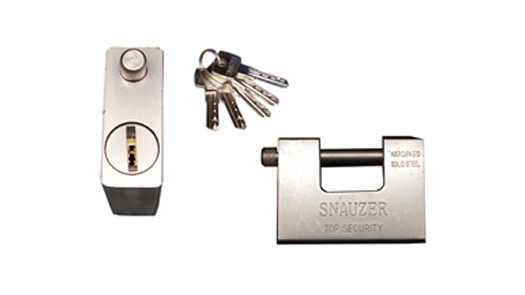
Phosphate conversion coating plus paint is recommended for components that need both corrosion resistance and dimensional precision, such as forged handles and snauzer padlocks. The phosphate layer improves paint adhesion and adds a measure of under-film corrosion resistance. When combined with a marine-grade topcoat, this system protects fasteners and locking elements that see constant handling.
What to avoid: Bright zinc plating alone, decorative chrome, and thin powder coats applied over unprepared surfaces all fail prematurely in marine environments. They offer initial visual appeal but break down within months when exposed to salt spray and UV radiation.
Matching Finishes to Container Components
Not every part needs the same treatment. The ideal specification balances protection, cost, and functionality:
-
Roof panels, side panels, and front panels (4-corrugation and 5-corrugation, for 8’6″ and 9’6″ containers) should use high-strength steel with hot-dip galvanized coating. These large surfaces face direct salt spray and rain. Silvaro Global supplies panels with consistent corrugation profiles that match OEM dimensions, so they fit without modification. For quick repairs, pre-cut patches are available to address localized damage before it spreads.
-
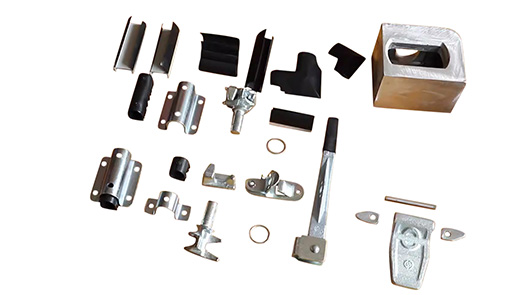
Door locking assemblies—including locking gear, door gear cams, keepers, forged handles, snauzer padlocks, and lockboxes—require a heavier finish system. The moving parts and locking functions demand both corrosion protection and wear resistance. Zinc-rich primer plus a durable topcoat provides the right combination. These components must also meet dimensional tolerances precisely; any coating that adds significant thickness can interfere with the locking mechanism.
-
Structural posts and rails—front posts, rear posts, side rails, and front/rear bottom rails for 8’6″ and 9’6″ boxes—are best protected with hot-dip galvanizing. These components bear the container’s structural load and face the harshest conditions at sea, including contact with seawater splash and mechanical abrasion during handling. Custom-pressed side rails are available for special repair projects, with the same corrosion protection applied post-forming.
How Installation Practice Affects Corrosion Life
Even the best finish fails if installation is flawed. When hardware is bolted or welded, the protective coating is damaged at the attachment points. Proper repair practice requires touching up these areas with cold-galvanizing compound or zinc-rich paint immediately after installation. Bare edges, drilled holes, and weld zones are the most vulnerable points on any container.
Additionally, using stainless steel fasteners to attach carbon steel hardware prevents galvanic corrosion—a common and avoidable failure mode. When dissimilar metals contact in a wet, saline environment, the less noble metal corrodes rapidly. Silvaro Global can advise on fastener selection to match your hardware and structural components.
Why Consistency of Supply Matters More Than Initial Price
Rust prevention is only as good as the consistency of the materials delivered. A batch of panels with minor alloy variations or a supply of locking gear with irregular coating thickness can undermine an entire fleet maintenance program. This is why the supplier’s audit process matters as much as the specification.
Shanghai Silvaro Global Co., Ltd. works exclusively with audited manufacturers. Our partners undergo regular quality checks covering steel chemistry, coating thickness, and dimensional conformity. We verify that every batch of dry container parts meets OEM ISO standards before it ships. This disciplined approach means our clients receive components that install without rework and perform predictably over their service life.
Building a Corrosion-Proof Maintenance Inventory
The most effective rust prevention strategy combines quality materials with a well-planned parts inventory. When a container comes into the depot with early-stage corrosion, immediate replacement of affected hardware is far cheaper than waiting for structural damage. Keeping standard sizes in stock—for 8’6″ and 9’6″ containers—allows repair crews to pull the exact part and complete the job in a single shift.
One-stop supply simplifies this process. Instead of sourcing door locking assemblies from one vendor, panels from another, and structural rails from a third, depots consolidate their order with a single partner. This approach reduces procurement time, ensures consistent quality across all parts, and simplifies quality traceability. A complete shipment can cover door lock fittings, corrugated panels, and structural posts and rails at once, cutting procurement lead times for every repair order.
Selecting a Partner Who Owns the Marine Environment
Corrosion protection is a system, not a single coating. It begins with material selection, continues through the finishing process, and extends to packaging, logistics, and after-sales technical support. For global shipping lines and container depots, working with a partner who understands the full picture is essential.
Shanghai Silvaro Global Co., Ltd. operates from the heart of China’s largest shipping hub. Our location gives us a strategic advantage in logistics—short delivery lead times, efficient port access, and close coordination with container yards and vessel operators. We serve overseas partners with one-stop professional technical support, helping you select the right material grades, finishes, and replacement intervals for your specific operating environment.
We do not simply sell parts. We help you specify a corrosion management system that keeps your fleet in service longer, reduces repair labor, and protects your cargo—and your reputation.
Specifying for Decades, Not Seasons
The difference between hardware that fails within a year and hardware that serves for decades is visible in the specification sheet before the first part is delivered. Choose hot-dip galvanized structural components. Choose duplex-coated locking gear. Choose manufacturing partners who verify every dimension. And choose a supply partner who treats corrosion resistance as a science, not an afterthought.
The marine environment offers no forgiveness. Salt spray does not negotiate. But with the right materials, finishes, and supply discipline, your dry container hardware can remain rust-free for decades—and that is exactly the standard we hold ourselves to.
Explore our complete range of dry container parts, including door locking assemblies, corrugated panels, and structural posts and rails, designed to meet OEM ISO specifications for 8’6″ and 9’6″ containers.
Shanghai Silvaro Global Co., Ltd.
Website: